Do I Need a Fractional CFO?

Kirk Conole • July 16, 2025

Trying to grow into the middle market? Many business owners make the mistake of giving the “CFO” title to the overworked, under-equipped accounting manager.


When a loyal, affordable accounting manager who lacks the ability to forecast future performance and resource requirements is made the CFO you might see these warning signs:


WARNING SIGNS:

  1. Closings are consistently late and you don’t know why.
  2. Your bank covenants are never on time and you have a hard time getting funding.
  3. Your business valuation is below average for your market.
  4. Your repeatedly have unexpected cash shortages.
  5. You don’t really understand your financial statements.
  6. You don’t know what results to expect in the next 6-12 months.


Employers with less than $10MM revenue who want to triple revenues should get high-level, strategic CFO guidance, even if part time. The right CFO talent will pay for the added salary cost many times over.


The Fractional CFO


The most cost-efficient way for many medium sized businesses to grow into the middle market is to deploy a top talent CFO on a part-time basis.

How do you know when you’ve chosen the right fractional CFO? The first way you know is that the six warning signs disappear.

The other way you know is when you say to your fractional CFO: “Ever since you came onboard, I know more about my business than I ever did!”

WHEN TO CONSIDER A FULL-TIME CFO


Business owners who want to further increase their cost efficiency use DCI’s Cost Efficiency dashboard. To learn how this increases profit and market value up to 10%, contact DCI Solutions at: 
info@dcisolutions.net | 760-809-8734


By Kirk Conole July 29, 2026
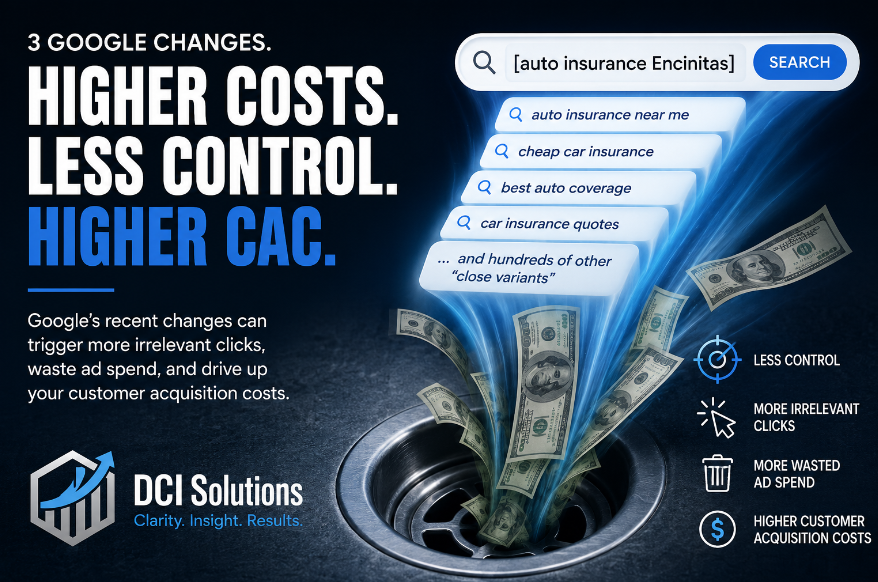
Google Ads has always evolved, but a few recent changes have made it more difficult for businesses to control where their advertising dollars go. Three changes, in particular, can have a direct impact on your customer acquisition costs (CAC): Expanded "exact match" keywords to include broader "close variants." Shifted more bidding decisions to AI-driven automation. Reduced transparency into how advertising prices are determined. At first glance, these updates may sound like improvements designed to increase reach and efficiency. In reality, they can also result in your ads appearing for searches you never intended to target. For example, you might bid on the exact-match keyword [auto insurance Encinitas] , expecting your ads to appear only for that specific search. Instead, Google may show your ad for broader searches it considers to be a "close variant." While some of those clicks may be valuable, others may come from users who are unlikely to become customers. The result is simple: More irrelevant clicks Higher advertising spend Lower campaign efficiency Increased customer acquisition costs Many businesses assume rising advertising costs are simply the new normal. In reality, a portion of that increase may be caused by how campaigns are configured and how Google's automated systems are making decisions on your behalf.  That doesn't necessarily mean you need to replace your marketing agency. It does mean it's worth taking a closer look at where your advertising dollars are going. At DCI Solutions , our independent advertising audit is designed to uncover wasted ad spend, identify hidden inefficiencies, and provide objective recommendations, all while allowing you to continue working with your current agency if you choose. Before increasing your advertising budget, make sure you're maximizing the one you already have.
By Kirk Conole July 8, 2026
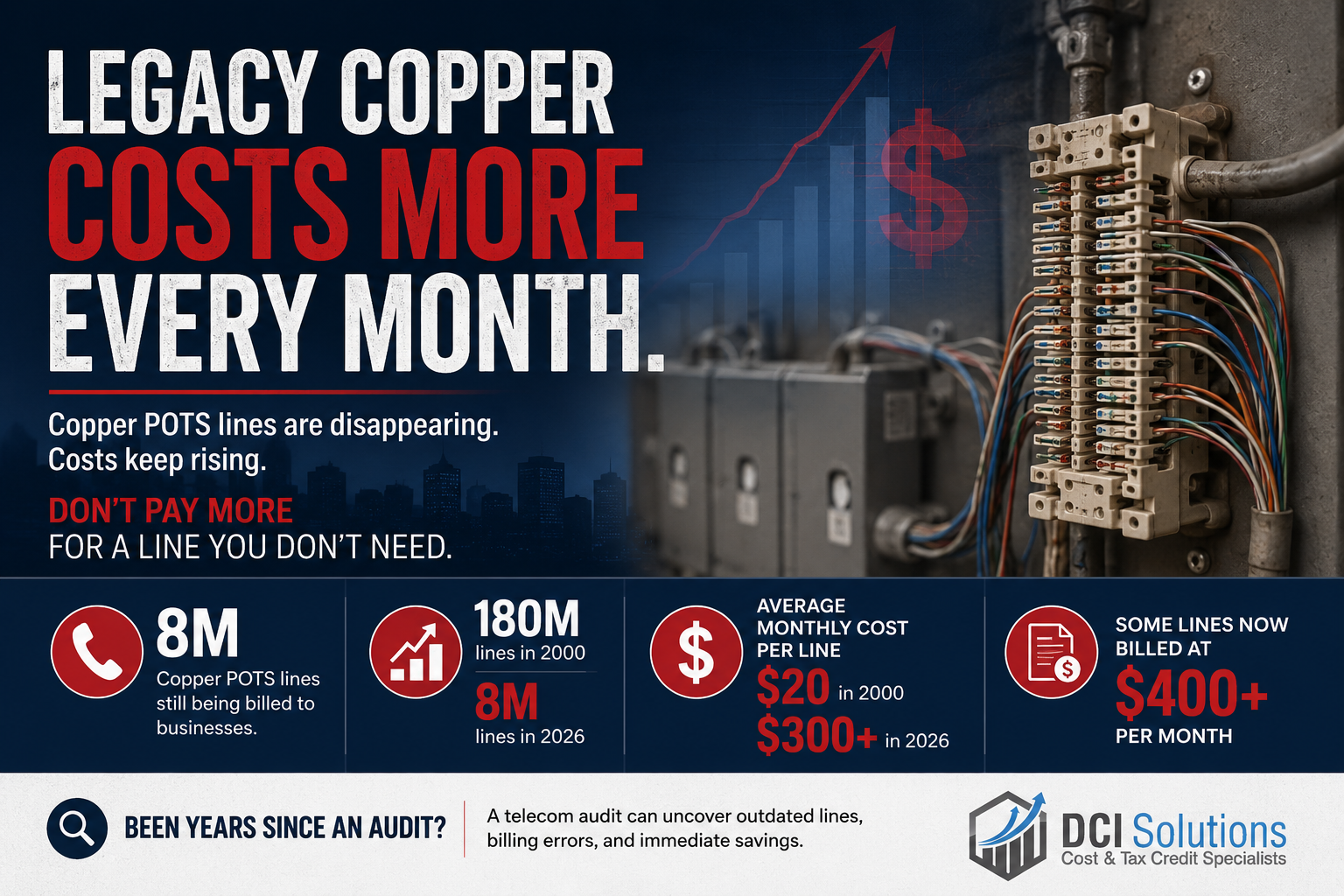
The fewer copper phone lines that exist, the more expensive they become. For decades, Plain Old Telephone Service (POTS) lines were the backbone of business communications. They powered fax machines, alarm systems, elevators, fire panels, point-of-sale terminals, and countless other mission-critical devices. Today, they're rapidly disappearing. Yet many organizations continue paying for legacy copper lines they no longer need, or paying dramatically inflated prices for the ones they still do. The result? Thousands of dollars in unnecessary telecom spending, hiding in plain sight.
Construction promo graphic: “Structuring beats shopping,” claiming $1 million saved on insurance premiums.
By Kirk Conole June 23, 2026
Many construction firms assume the best way to lower insurance costs is to shop their coverage to as many carriers as possible. In reality, that approach often produces the same result: multiple quotes based on the same flawed assumptions, inflated values, and standard market pricing.  Recently, a builder reduced construction insurance premiums by more than $1 million without a traditional shopping exercise. The savings came from restructuring the program before it ever reached underwriting.
By Kirk Conole June 19, 2026
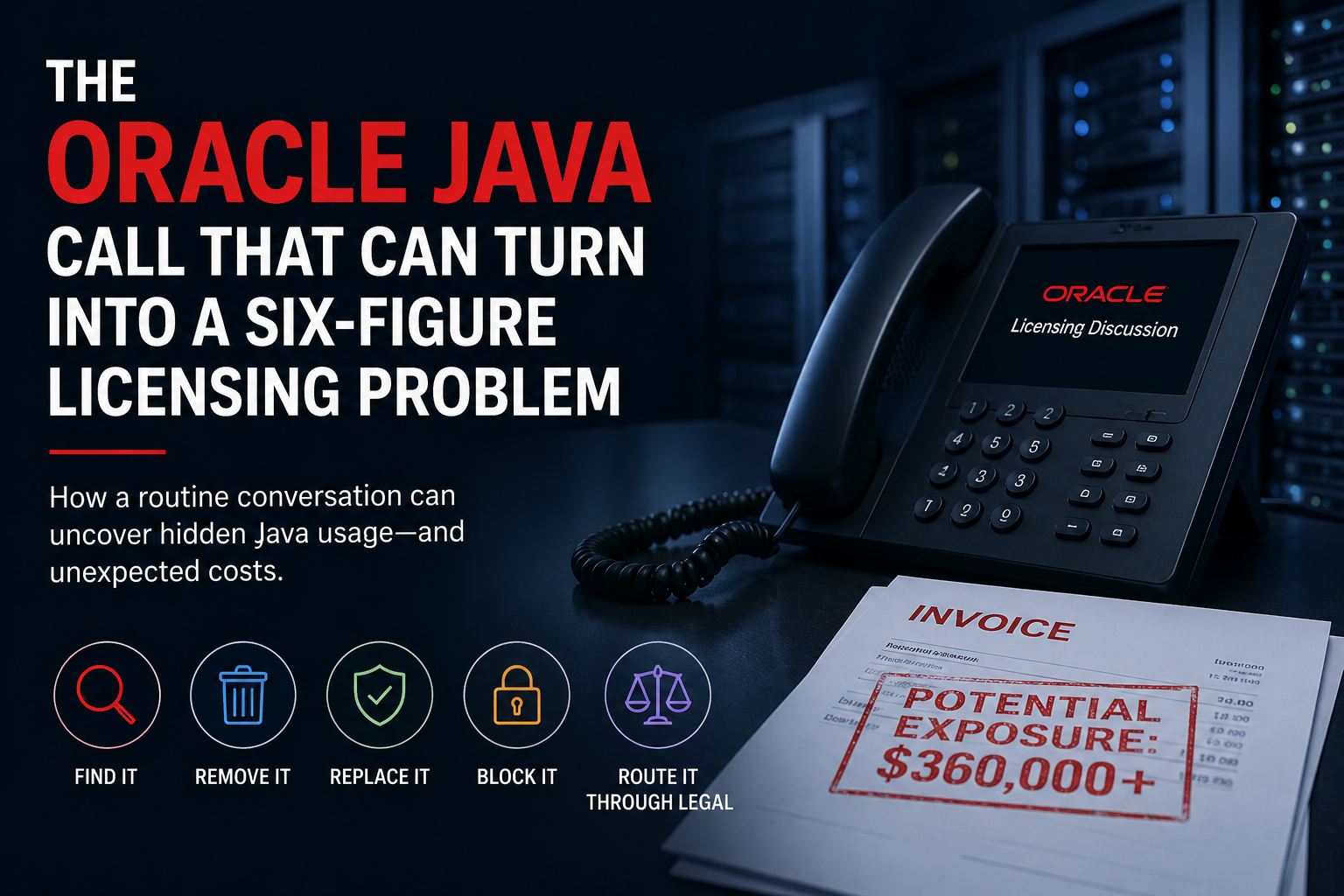
For many IT leaders, it starts with what sounds like a routine phone call. Oracle reaches out requesting a "quick discussion" about your Java environment. The conversation is typically positioned as a support check-in, a licensing update, a security discussion, or a general review of your organization's Java usage. On the surface, it appears harmless. In reality, the discussion often serves a much different purpose: determining whether Oracle Java exists anywhere within your environment. Once that is established, the conversation tends to shift quickly. Questions may include: How many employees does your organization have? Who is using Oracle Java? Which systems rely on it? Are contractors or subsidiaries involved? How broadly is Java deployed across the enterprise?  At that point, the licensing exposure calculation begins.
Blue Collar Workers tax credit flyer with earnings examples and white text on a dark banner
By Kirk Conole June 10, 2026
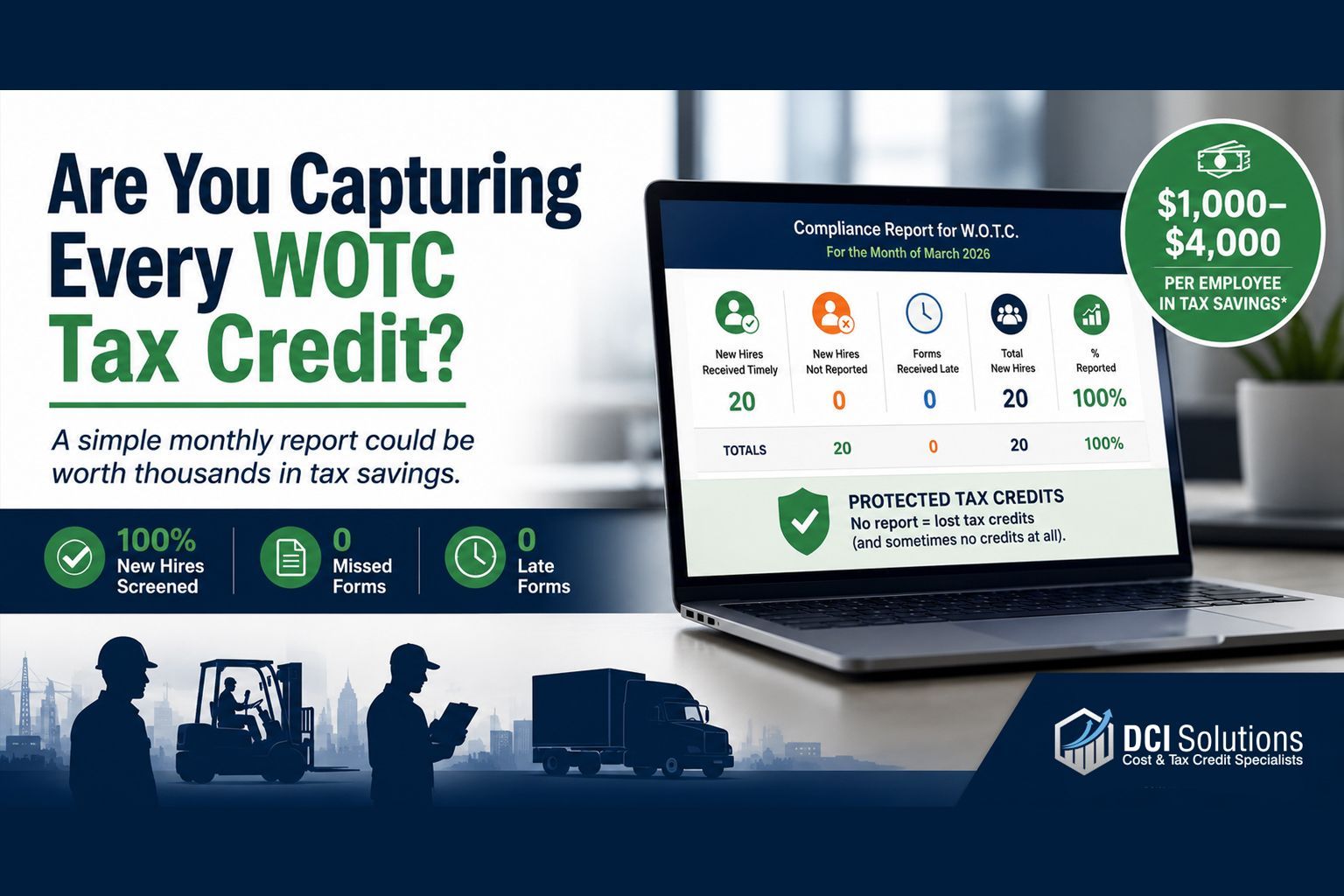
Many employers who hire blue-collar workers assume they're receiving every available Work Opportunity Tax Credit (WOTC). The reality is that many companies lose valuable tax credits simply because the process isn't being monitored correctly. One of the easiest ways to verify compliance is through a monthly reporting system. A simple report should clearly show: New hires screened on time Missed forms Late submissions Overall compliance percentage In the example below, the employer achieved: 100% of new hires screened on time 0 missed forms 0 late forms That level of compliance helps ensure tax credits are protected and available when it's time to file. The problem is that many organizations never receive this type of visibility. Without regular reporting, missed screenings and late paperwork can quietly eliminate tax credits that should have been captured. The financial impact can be significant. Even a relatively small number of qualified hires may generate thousands of dollars in tax savings. In many cases, companies discover additional opportunities through an independent audit of their tax credit and operational processes. A thorough forensic review often uncovers overlooked savings, compliance gaps, and process inefficiencies. For many organizations, the combined effect can translate into meaningful cash flow improvements without changing vendors, disrupting operations, or taking on additional risk. The question isn't whether WOTC credits exist for your workforce. The question is whether you're capturing every dollar you're entitled to. When was the last time an outside expert reviewed your process?  Being busy is understandable. Leaving money on the table isn't.
By Kirk Conole June 4, 2026
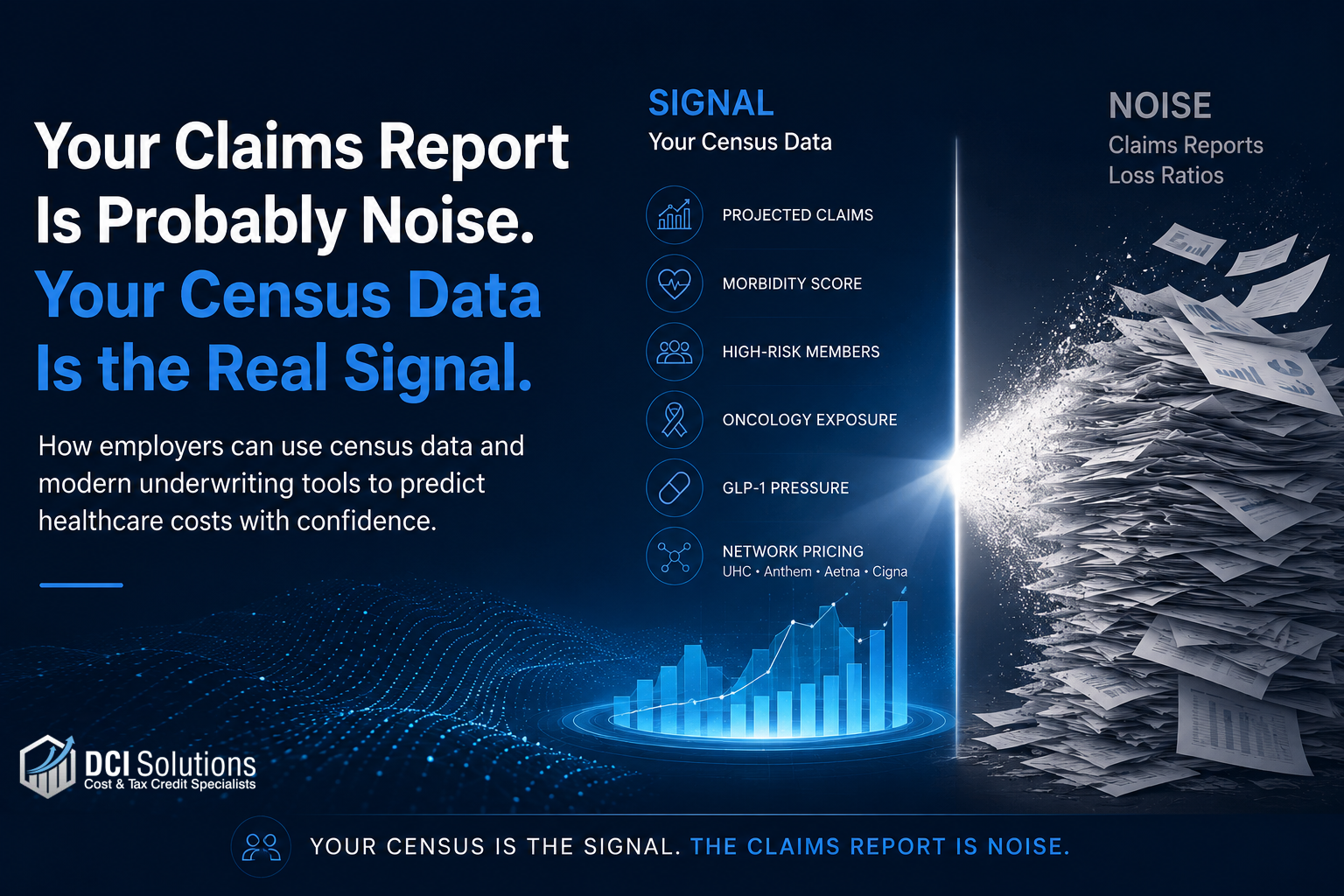
For decades, employers have been conditioned to believe that health insurance claims reports are the key to understanding healthcare costs. They're not. In fact, by the time most employers receive a claims report, the information is already historical. It tells you what happened, not what's likely to happen next.  That's a problem when healthcare spending continues to rise and employers are being asked to make critical decisions about funding strategies, stop-loss coverage, network selection, and employee benefits.
Man walking on a road at sunset with bold text about hard work, discipline, and performance standards.
By Kirk Conole May 27, 2026
Learn how high performance standards reveal hidden savings in your business. Contact DCI Solutions for expert cost management today!
Elevator lobby with text about cutting maintenance overcharges by 70% and saving $185,000 per year.
By Kirk Conole May 18, 2026
Learn how a private college cut elevator maintenance costs by 70%, saving $185,000 annually. Contact DCI Solutions for effective strategies.
Infographic showing a restaurant’s 45% healthcare cost reduction, with before-and-after cost figures and a blue city backdrop
By Kirk Conole May 14, 2026
Learn how a restaurant group cut healthcare costs by 45% using self-funding & AI analytics. Contact us to explore similar savings!
By Kirk Conole May 8, 2026
Most companies accept annual freight increases as unavoidable. FedEx Freight’s LTL general rate increased 5.9% from 2023 to 2024, and then another 5.9% from 2024 to 2025. Over time, these annual General Rate Increases (GRIs) quietly compound into a major expense line that most businesses never fully challenge. But what if you could reverse the impact of those increases?