Why Legacy Copper POTS Lines Are Becoming One of the Most Expensive Telecom Costs You Don't Know You Have

Kirk Conole • July 8, 2026

The fewer copper phone lines that exist, the more expensive they become.


For decades, Plain Old Telephone Service (POTS) lines were the backbone of business communications. They powered fax machines, alarm systems, elevators, fire panels, point-of-sale terminals, and countless other mission-critical devices.

Today, they're rapidly disappearing.


Yet many organizations continue paying for legacy copper lines they no longer need, or paying dramatically inflated prices for the ones they still do.


The result? Thousands of dollars in unnecessary telecom spending, hiding in plain sight.

A Shrinking Network with Rising Costs

The telecom industry has experienced a dramatic shift over the past 25 years.


While copper infrastructure is being retired across the country, millions of legacy POTS lines remain in service.


At the same time, monthly costs have climbed sharply.


The trend is difficult to ignore:


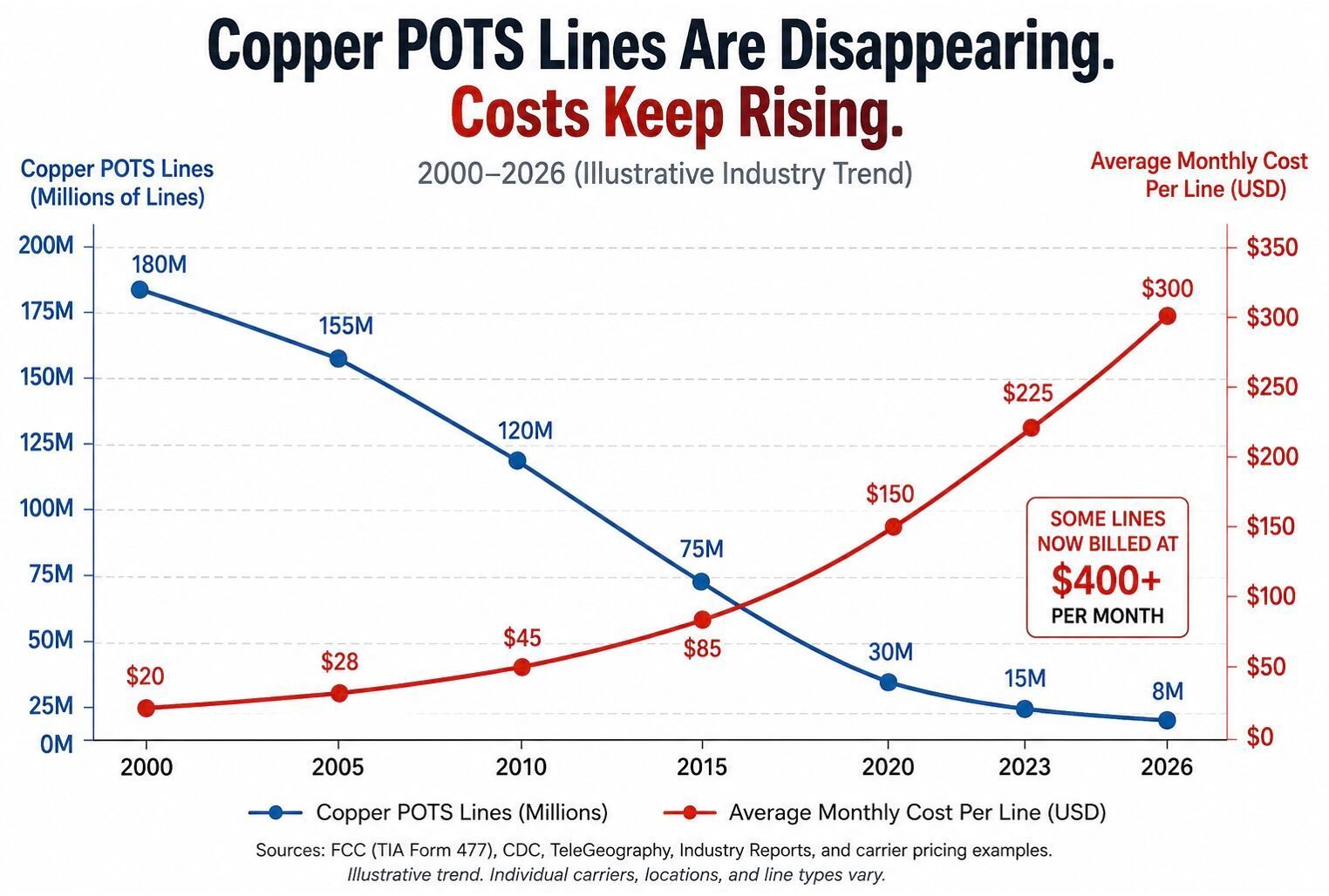
  • Approximately 180 million copper POTS lines existed around 2000.
  • Today, that number has fallen to roughly 8 million.
  • Meanwhile, average monthly pricing has increased from around $20 per line to approximately $300 per line, with some businesses paying more than $400 per month for a single circuit.


As the customer base shrinks, carriers continue to maintain aging infrastructure for fewer subscribers. Those costs are increasingly passed on to the businesses that haven't yet transitioned away from copper.
Why Businesses Continue Paying

Most organizations don't intentionally choose to keep expensive legacy lines.


Instead, they remain because no one has looked at the telecom environment in years.


Common examples include:


  • Fire alarm panels
  • Elevator emergency phones
  • Security systems
  • Fax machines
  • Building access systems
  • Legacy point-of-sale equipment
  • Backup circuits that are no longer needed


Over time, employees change roles, vendors change, buildings are renovated, and invoices continue getting paid.


The lines stay.


The costs grow.

The Hidden Cost of "Business as Usual"

Telecom bills often contain hundreds, or even thousands, of individual charges spread across multiple carrier invoices.


Without periodic audits, organizations may never notice:


  • Lines that no longer serve a purpose
  • Duplicate circuits
  • Incorrect billing
  • Carrier pricing increases
  • Services that should have been disconnected years ago


Because telecom expenses are typically viewed as routine operating costs, they often escape the same level of scrutiny given to other major expenditures.

A Telecom Audit Can Reveal Immediate Savings

A comprehensive telecom audit goes beyond reviewing monthly invoices.


It helps determine:


  • Which circuits are still active
  • Whether each line is still required
  • If less expensive technologies are available
  • Whether carrier pricing is accurate
  • Which legacy services can be eliminated entirely


Many organizations discover that they are paying for infrastructure installed years, or even decades, ago that nobody realized was still active.

Don't Assume Your Organization Isn't Overpaying

If it's been several years since anyone reviewed your telecom environment, there's a good chance costs have changed dramatically.


Carriers aren't likely to call and suggest lowering your monthly bill.


That's why independent audits remain one of the most effective ways to uncover hidden telecom expenses before they continue compounding year after year.


With copper POTS lines disappearing nationwide, businesses that continue relying on legacy infrastructure may be paying significantly more than they realize.


The question isn't whether prices have increased.


It's whether your organization is paying those increases without knowing it.

Is It Time for a Telecom Audit?

If you haven't authorized a telecom audit in several years, now is the time to take another look.


An independent review can identify unnecessary legacy services, verify billing accuracy, and uncover opportunities to reduce recurring telecom expenses, often without disrupting business operations.


Don't assume you're not paying $300 or even $400+ per month for a line you barely use.


Because the easiest telecom expense to eliminate is usually the one you didn't know you still had.

Let's Talk

At DCI Solutions, we help companies take a more strategic approach to savings.


If you’d like to learn more about how DCI can help your company, we’re happy to have a conversation.


Please feel free to contact us here: info@dcisolutions.net | 760-809-8734  or set up a meeting here .

Construction promo graphic: “Structuring beats shopping,” claiming $1 million saved on insurance premiums.
By Kirk Conole June 23, 2026
Many construction firms assume the best way to lower insurance costs is to shop their coverage to as many carriers as possible. In reality, that approach often produces the same result: multiple quotes based on the same flawed assumptions, inflated values, and standard market pricing.  Recently, a builder reduced construction insurance premiums by more than $1 million without a traditional shopping exercise. The savings came from restructuring the program before it ever reached underwriting.
By Kirk Conole June 19, 2026
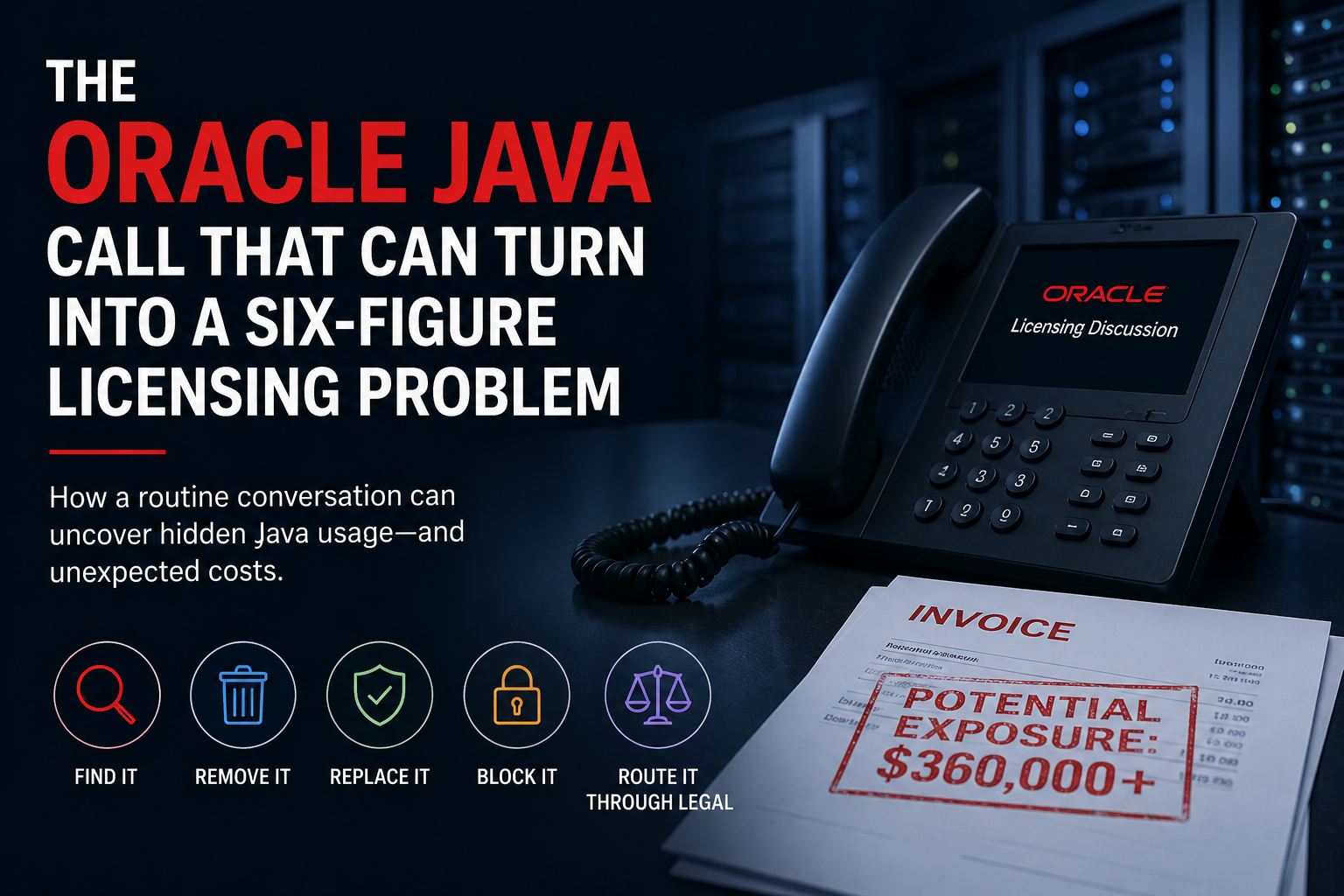
For many IT leaders, it starts with what sounds like a routine phone call. Oracle reaches out requesting a "quick discussion" about your Java environment. The conversation is typically positioned as a support check-in, a licensing update, a security discussion, or a general review of your organization's Java usage. On the surface, it appears harmless. In reality, the discussion often serves a much different purpose: determining whether Oracle Java exists anywhere within your environment. Once that is established, the conversation tends to shift quickly. Questions may include: How many employees does your organization have? Who is using Oracle Java? Which systems rely on it? Are contractors or subsidiaries involved? How broadly is Java deployed across the enterprise?  At that point, the licensing exposure calculation begins.
Blue Collar Workers tax credit flyer with earnings examples and white text on a dark banner
By Kirk Conole June 10, 2026
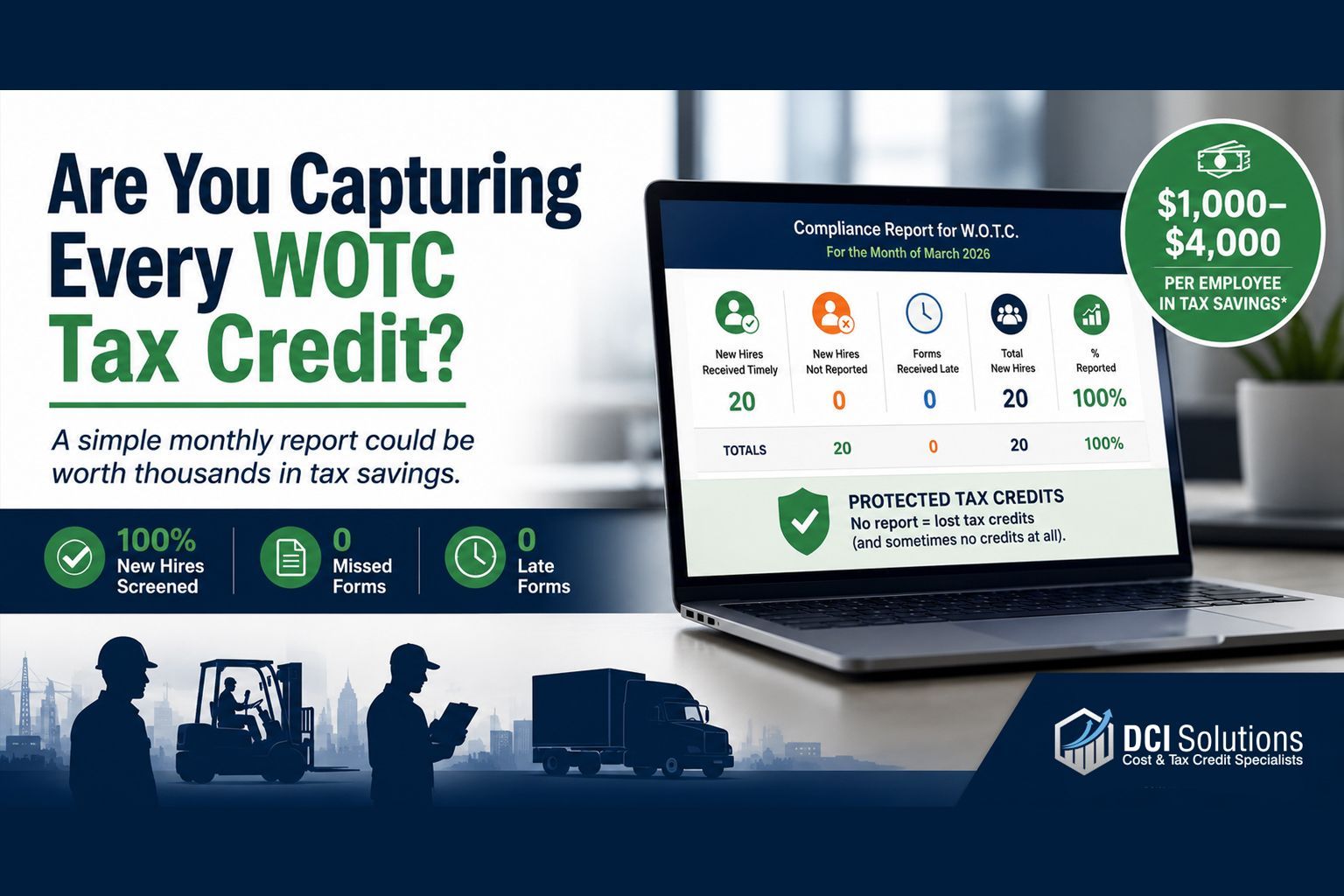
Many employers who hire blue-collar workers assume they're receiving every available Work Opportunity Tax Credit (WOTC). The reality is that many companies lose valuable tax credits simply because the process isn't being monitored correctly. One of the easiest ways to verify compliance is through a monthly reporting system. A simple report should clearly show: New hires screened on time Missed forms Late submissions Overall compliance percentage In the example below, the employer achieved: 100% of new hires screened on time 0 missed forms 0 late forms That level of compliance helps ensure tax credits are protected and available when it's time to file. The problem is that many organizations never receive this type of visibility. Without regular reporting, missed screenings and late paperwork can quietly eliminate tax credits that should have been captured. The financial impact can be significant. Even a relatively small number of qualified hires may generate thousands of dollars in tax savings. In many cases, companies discover additional opportunities through an independent audit of their tax credit and operational processes. A thorough forensic review often uncovers overlooked savings, compliance gaps, and process inefficiencies. For many organizations, the combined effect can translate into meaningful cash flow improvements without changing vendors, disrupting operations, or taking on additional risk. The question isn't whether WOTC credits exist for your workforce. The question is whether you're capturing every dollar you're entitled to. When was the last time an outside expert reviewed your process?  Being busy is understandable. Leaving money on the table isn't.
By Kirk Conole June 4, 2026
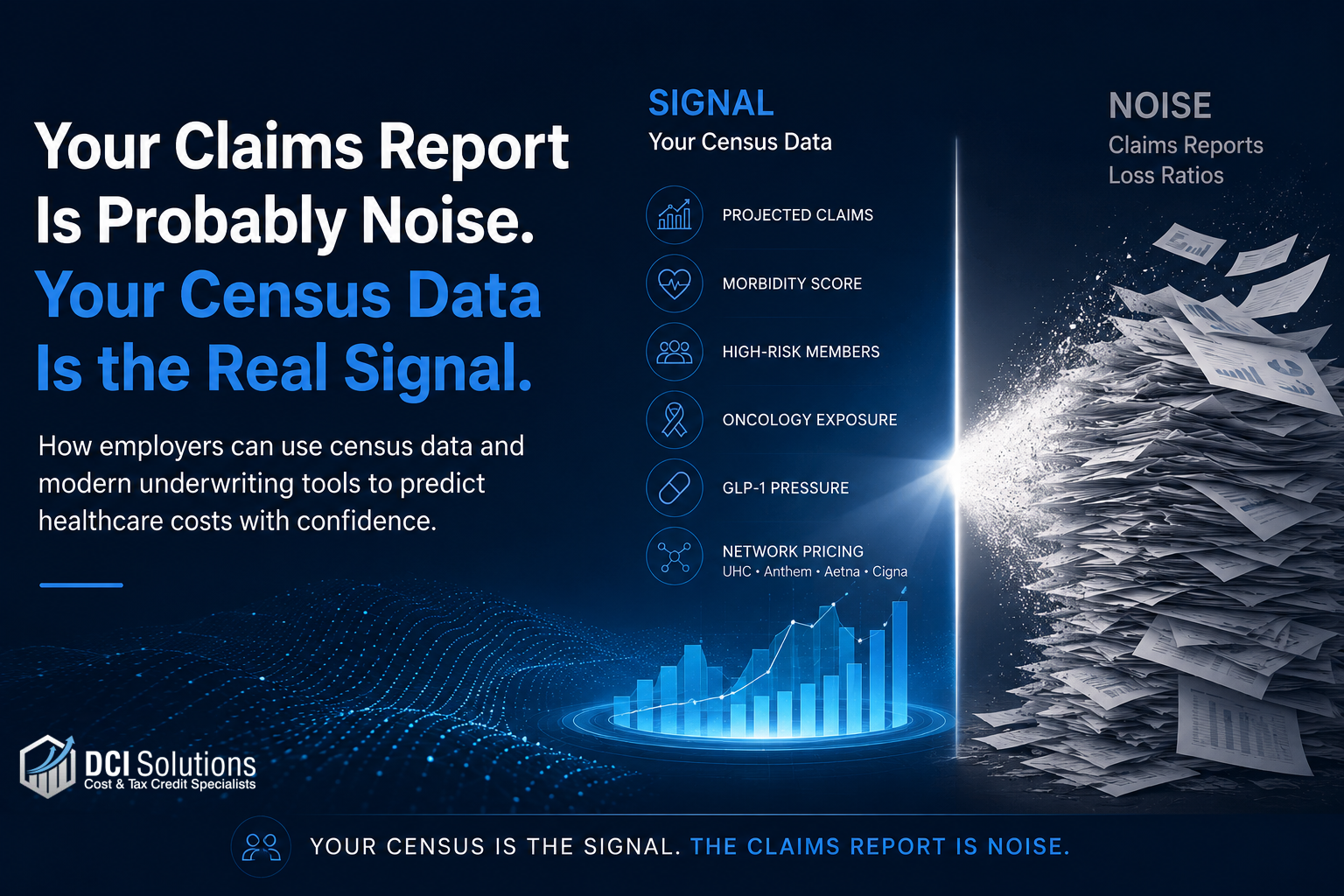
For decades, employers have been conditioned to believe that health insurance claims reports are the key to understanding healthcare costs. They're not. In fact, by the time most employers receive a claims report, the information is already historical. It tells you what happened, not what's likely to happen next.  That's a problem when healthcare spending continues to rise and employers are being asked to make critical decisions about funding strategies, stop-loss coverage, network selection, and employee benefits.
Man walking on a road at sunset with bold text about hard work, discipline, and performance standards.
By Kirk Conole May 27, 2026
Learn how high performance standards reveal hidden savings in your business. Contact DCI Solutions for expert cost management today!
Elevator lobby with text about cutting maintenance overcharges by 70% and saving $185,000 per year.
By Kirk Conole May 18, 2026
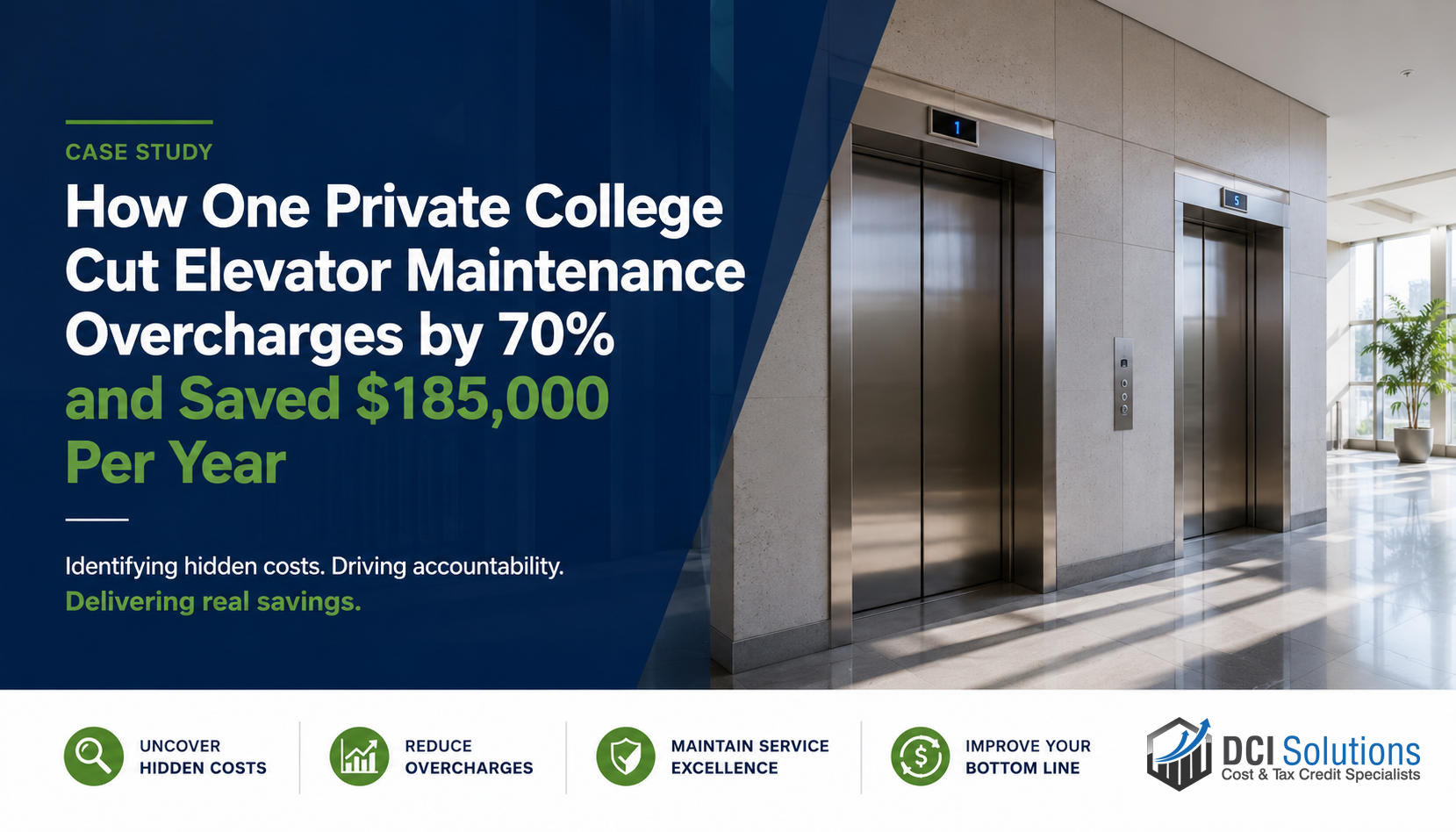
Learn how a private college cut elevator maintenance costs by 70%, saving $185,000 annually. Contact DCI Solutions for effective strategies.
Infographic showing a restaurant’s 45% healthcare cost reduction, with before-and-after cost figures and a blue city backdrop
By Kirk Conole May 14, 2026
Learn how a restaurant group cut healthcare costs by 45% using self-funding & AI analytics. Contact us to explore similar savings!
By Kirk Conole May 8, 2026
Most companies accept annual freight increases as unavoidable. FedEx Freight’s LTL general rate increased 5.9% from 2023 to 2024, and then another 5.9% from 2024 to 2025. Over time, these annual General Rate Increases (GRIs) quietly compound into a major expense line that most businesses never fully challenge. But what if you could reverse the impact of those increases?
Hire students, unlock hidden tax credits; three smiling students in blue promo graphic.
By Kirk Conole May 7, 2026
Employers can unlock federal tax credits by hiring student employees. Contact DCI Solutions to maximize your savings today!
By Kirk Conole April 24, 2026
For many businesses, healthcare is one of the largest and fastest-growing expenses on the balance sheet. Yet the way most companies manage it hasn’t changed in decades. A recent case we worked on highlights just how costly that can be.