Why Structuring Construction Insurance Beats Shopping It

Kirk Conole • June 23, 2026

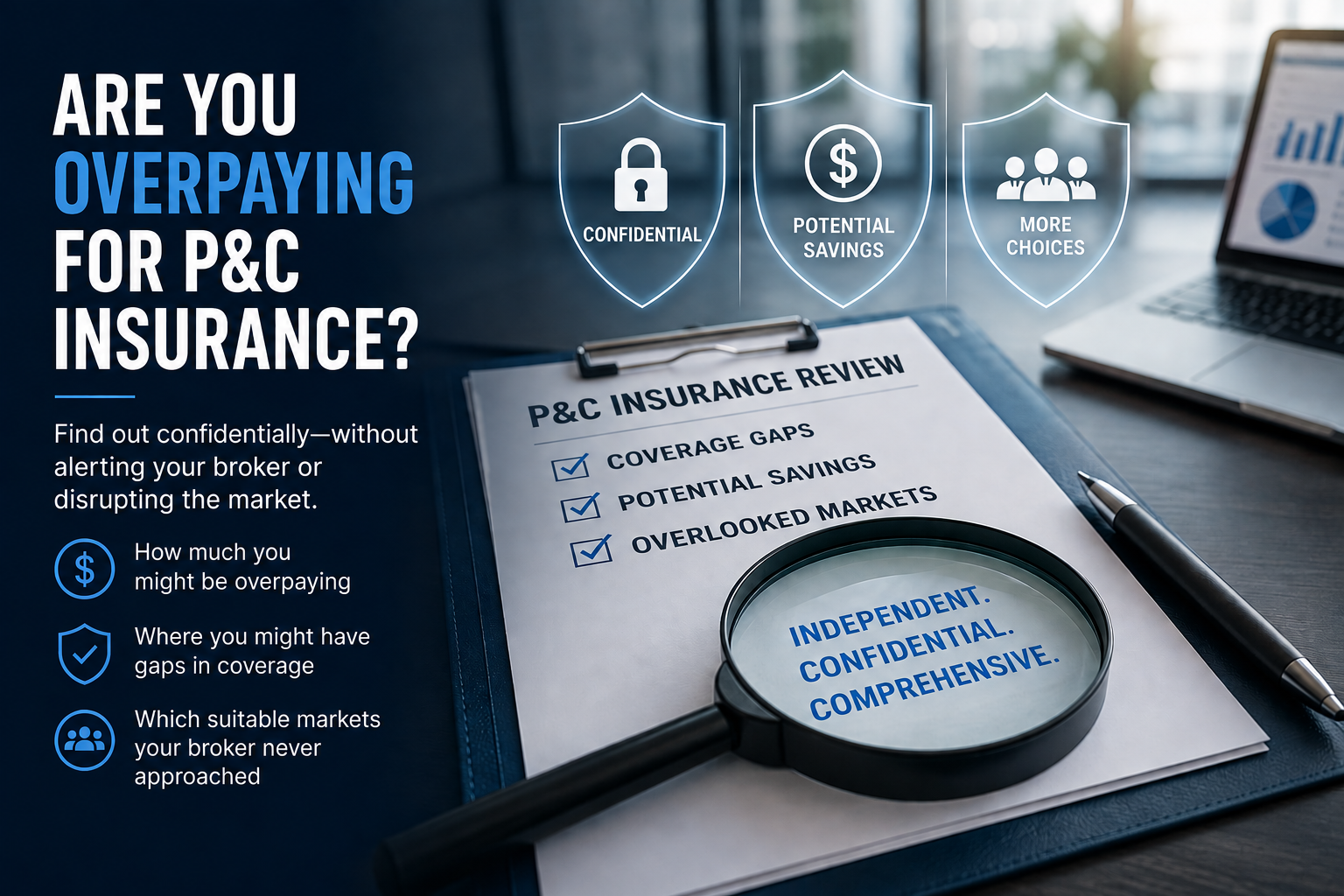
Many construction firms assume the best way to lower insurance costs is to shop their coverage to as many carriers as possible.


In reality, that approach often produces the same result: multiple quotes based on the same flawed assumptions, inflated values, and standard market pricing.


Recently, a builder reduced construction insurance premiums by more than $1 million without a traditional shopping exercise. The savings came from restructuring the program before it ever reached underwriting.

The Problem with "Shopping"

Most insurance placements are priced at or near retail levels for a few common reasons:


  • Too many intermediaries between the client and the carrier
  • Inflated or misaligned project values
  • Generic submissions that limit access to specialized markets
  • Coverage structures that don't accurately reflect the actual risk


When these issues exist, obtaining additional quotes rarely changes the outcome.

The Power of Proper Structuring

The greatest opportunities for savings often occur before underwriters review a submission.


A properly structured construction insurance program may include:


Access to Specialized Markets

Programs with delegated authority and wholesale market access can provide pricing models that differ significantly from standard retail channels.


Right-Sized Exposure Values

Accurately accounting for completed value at risk, phased construction schedules, and properly scoped soft costs can dramatically impact premiums.


Carrier Alignment

Not every carrier wants every type of construction risk. Matching projects with carriers that actively seek specific risk profiles often leads to more competitive pricing and better coverage terms.


Coverage and Deductible Optimization

Thoughtful deductible and coverage design can reduce premium costs without materially increasing a company's financial exposure.


Stronger Underwriting Submissions

Clean COPE (Construction, Occupancy, Protection, Exposure) data, realistic timelines, and documented loss-control measures help underwriters view projects more favorably.

The Bottom Line

Construction insurance premiums can vary by hundreds of thousands, or even millions, of dollars based on how a program is structured before it reaches the market.


In many cases, the largest savings opportunity isn't finding a different carrier. It's building a better submission, aligning with the right markets, and structuring the program correctly from the start.


That's why experienced risk advisors focus on structuring first and shopping second.


The result can be premium reductions ranging from $500,000 to more than $2 million while maintaining the coverage needed to protect the project.

Let's Talk

At DCI Solutions, we help companies take a more strategic approach to savings.


If you’d like to learn more about how DCI can help your company, we’re happy to have a conversation.


Please feel free to contact us here: info@dcisolutions.net | 760-809-8734  or set up a meeting here .
By Kirk Conole June 19, 2026
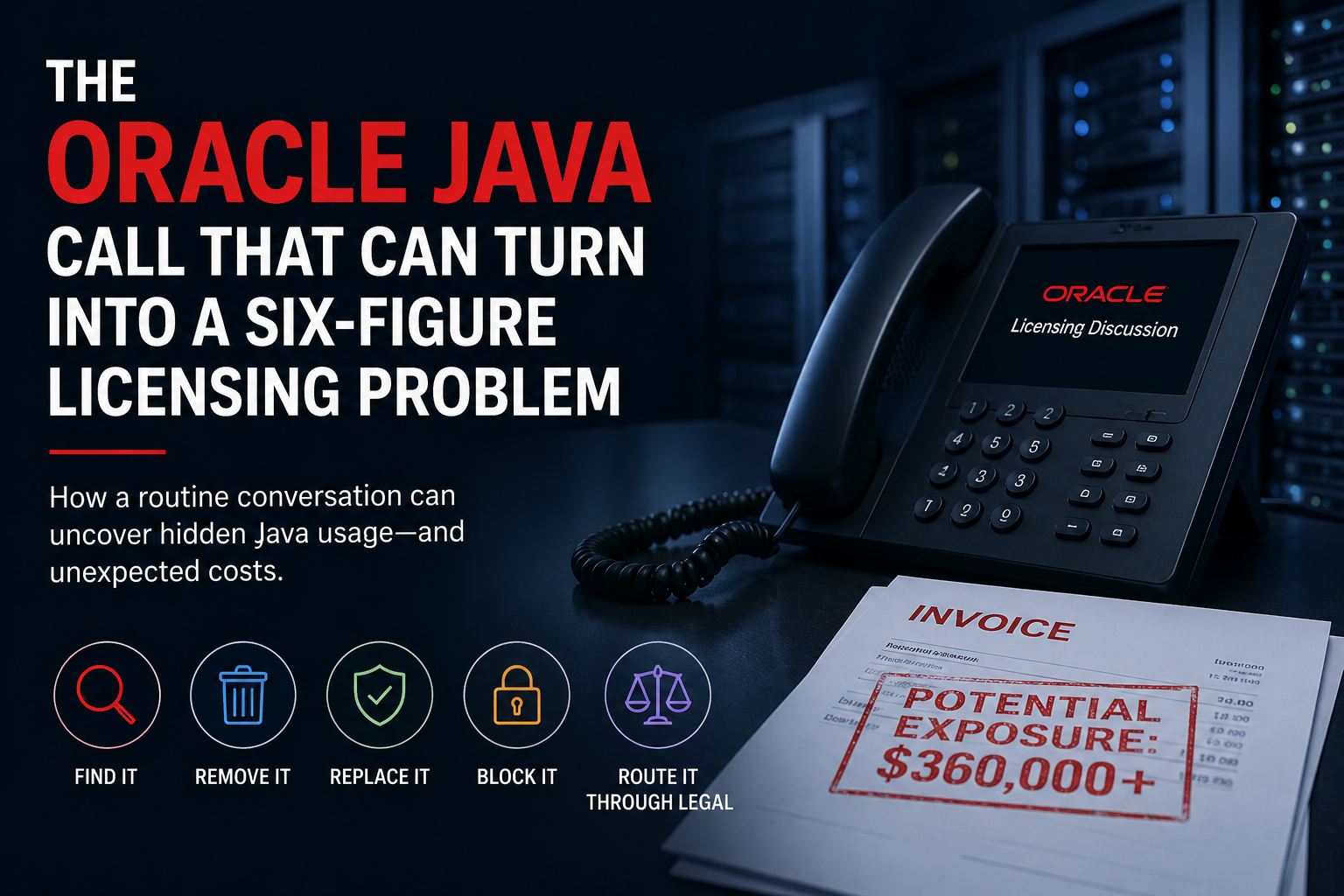
For many IT leaders, it starts with what sounds like a routine phone call. Oracle reaches out requesting a "quick discussion" about your Java environment. The conversation is typically positioned as a support check-in, a licensing update, a security discussion, or a general review of your organization's Java usage. On the surface, it appears harmless. In reality, the discussion often serves a much different purpose: determining whether Oracle Java exists anywhere within your environment. Once that is established, the conversation tends to shift quickly. Questions may include: How many employees does your organization have? Who is using Oracle Java? Which systems rely on it? Are contractors or subsidiaries involved? How broadly is Java deployed across the enterprise?  At that point, the licensing exposure calculation begins.
Blue Collar Workers tax credit flyer with earnings examples and white text on a dark banner
By Kirk Conole June 10, 2026
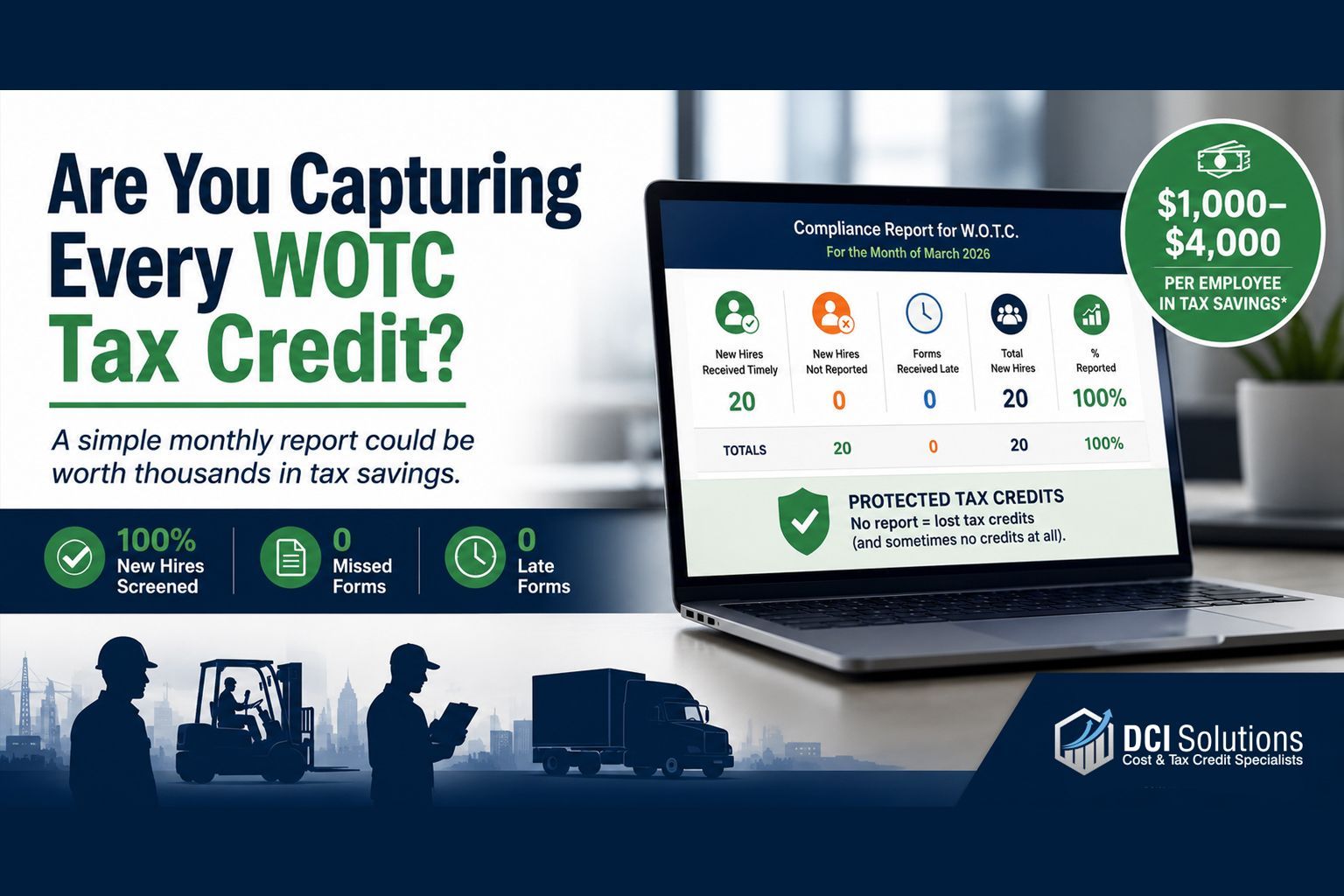
Many employers who hire blue-collar workers assume they're receiving every available Work Opportunity Tax Credit (WOTC). The reality is that many companies lose valuable tax credits simply because the process isn't being monitored correctly. One of the easiest ways to verify compliance is through a monthly reporting system. A simple report should clearly show: New hires screened on time Missed forms Late submissions Overall compliance percentage In the example below, the employer achieved: 100% of new hires screened on time 0 missed forms 0 late forms That level of compliance helps ensure tax credits are protected and available when it's time to file. The problem is that many organizations never receive this type of visibility. Without regular reporting, missed screenings and late paperwork can quietly eliminate tax credits that should have been captured. The financial impact can be significant. Even a relatively small number of qualified hires may generate thousands of dollars in tax savings. In many cases, companies discover additional opportunities through an independent audit of their tax credit and operational processes. A thorough forensic review often uncovers overlooked savings, compliance gaps, and process inefficiencies. For many organizations, the combined effect can translate into meaningful cash flow improvements without changing vendors, disrupting operations, or taking on additional risk. The question isn't whether WOTC credits exist for your workforce. The question is whether you're capturing every dollar you're entitled to. When was the last time an outside expert reviewed your process?  Being busy is understandable. Leaving money on the table isn't.
By Kirk Conole June 4, 2026
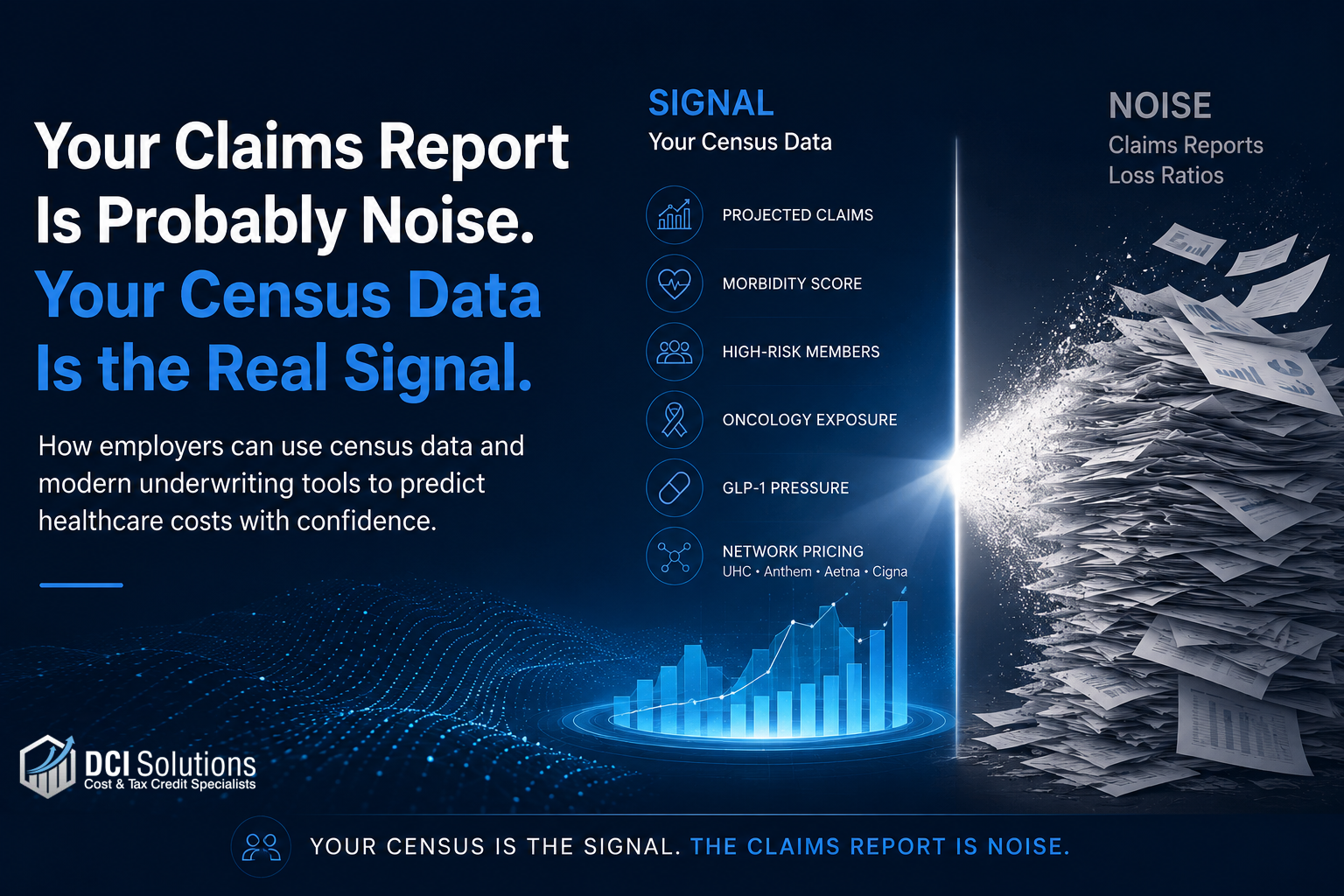
For decades, employers have been conditioned to believe that health insurance claims reports are the key to understanding healthcare costs. They're not. In fact, by the time most employers receive a claims report, the information is already historical. It tells you what happened, not what's likely to happen next.  That's a problem when healthcare spending continues to rise and employers are being asked to make critical decisions about funding strategies, stop-loss coverage, network selection, and employee benefits.
Man walking on a road at sunset with bold text about hard work, discipline, and performance standards.
By Kirk Conole May 27, 2026
Learn how high performance standards reveal hidden savings in your business. Contact DCI Solutions for expert cost management today!
Elevator lobby with text about cutting maintenance overcharges by 70% and saving $185,000 per year.
By Kirk Conole May 18, 2026
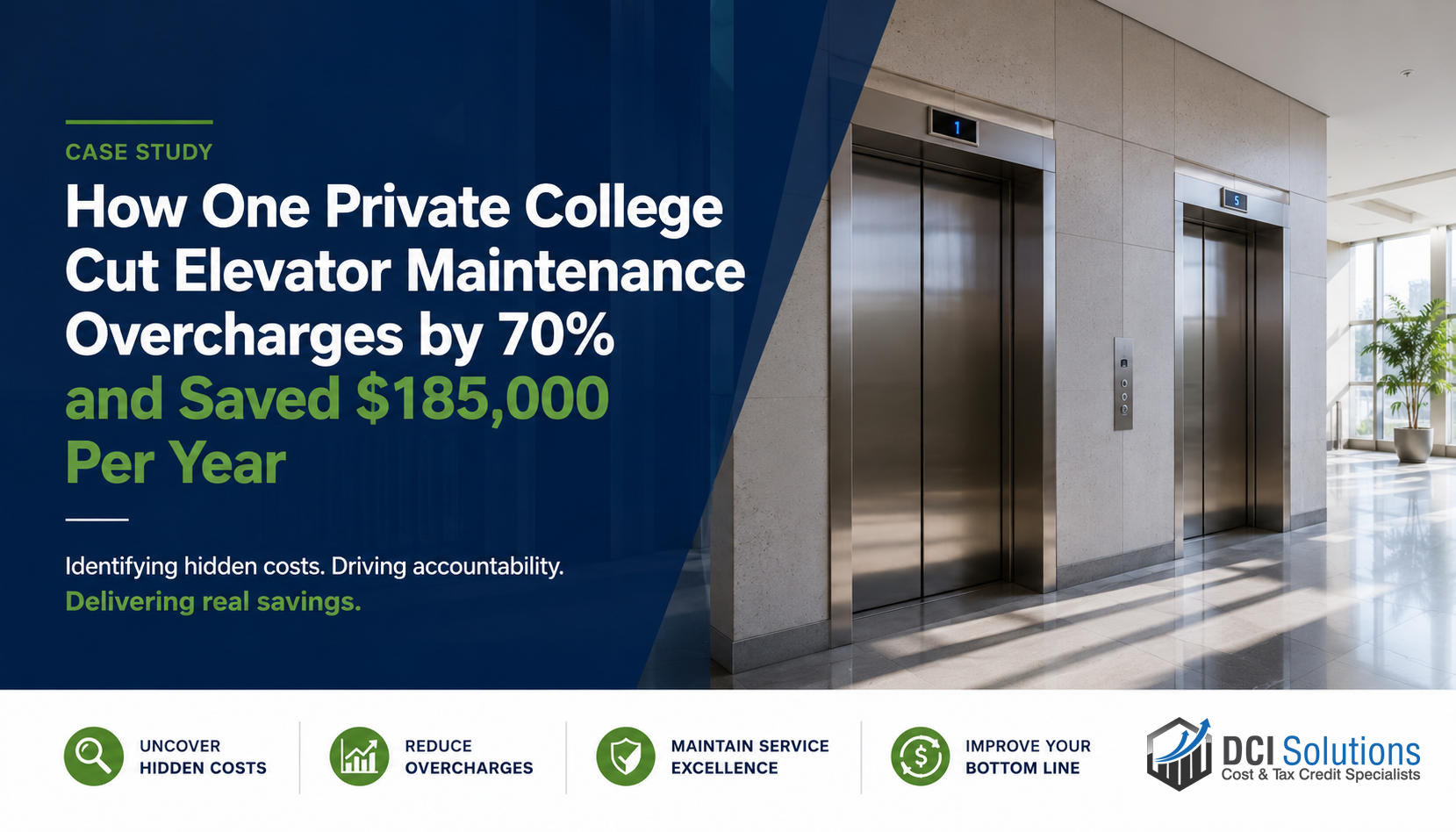
Learn how a private college cut elevator maintenance costs by 70%, saving $185,000 annually. Contact DCI Solutions for effective strategies.
Infographic showing a restaurant’s 45% healthcare cost reduction, with before-and-after cost figures and a blue city backdrop
By Kirk Conole May 14, 2026
Learn how a restaurant group cut healthcare costs by 45% using self-funding & AI analytics. Contact us to explore similar savings!
By Kirk Conole May 8, 2026
Most companies accept annual freight increases as unavoidable. FedEx Freight’s LTL general rate increased 5.9% from 2023 to 2024, and then another 5.9% from 2024 to 2025. Over time, these annual General Rate Increases (GRIs) quietly compound into a major expense line that most businesses never fully challenge. But what if you could reverse the impact of those increases?
Hire students, unlock hidden tax credits; three smiling students in blue promo graphic.
By Kirk Conole May 7, 2026
Employers can unlock federal tax credits by hiring student employees. Contact DCI Solutions to maximize your savings today!
By Kirk Conole April 24, 2026
For many businesses, healthcare is one of the largest and fastest-growing expenses on the balance sheet. Yet the way most companies manage it hasn’t changed in decades. A recent case we worked on highlights just how costly that can be.
A professional team in business attire gathers around a laptop in an office, smiling as they collaborate on a project.
By Kirk Conole October 27, 2025
Employee engagement determines a company’s health and profitability. Across a wide number of companies, Gallup reports that the level of employee engagement follows a “1/6 : 2/6 : 3/6” ratio. 1 out of 6 employees (including management) resist the ownership’s goals and vision. 2 out of 6 support the ownership’s goals and vision. 3 out of 6 are “neutral.” They can be swayed by either the “resisters” or the “supporters.” Owners and executives should understand that they are competing every day with the “resisting “1 /6” to win over the neutral “3 / 6” and to sustain supportive engagement from the “2/6.” To improve the chances of winning this competition, leaders should recognize and avoid two common flaws: FLAW #1: CRITICAL LEADERSHIP “Critical Leadership” results in staff feeling less than fully appreciated if not rewarded for taking informed but unrequired risks that could be in the best interest of the company’s ownership. Example: The CFO and the controller of a privately held company understood how a specialized tax credit and cost review would recover substantial amounts of cash. “The problem,” he said behind closed doors, “is the owner of this company would criticize us for not being able to find this money all by ourselves without you. We can’t have that.” In this example, the company owners and all of the “stakeholders” lose valuable cash because an “Insufficiently Engaged Employee” didn’t want to accept what was misperceived as personal risk. FLAW #2: REMOTE LEADERSHIP The best leadership is close enough to offer clear guidance, incentives and accountability to ensure the organization’s health and profitability. When personal attention is too remote for too long a period of time, the important opportunities that should be first brought to the owner/CEO for an informed decision and then implemented by the staff are ignored or blocked. Instead, those opportunities are left for the staff to review and pursue or ignore according to their “personal perspective” and desire to avoid “personal risk.” This “Abdelegation” (combination of delegation mixed with abdication) is why too many great decisions and gains don’t get made in time, if ever. Example: For the last few years, an AP audit/recovery service recovered millions for a Fortune 1000 company. In response to a corporate directive to cut costs, the accounting department either had to let go of a well-liked staff member or discontinue the AP audit/recovery service, which was paying for itself many times over. The department discontinued the service. The company is now in worse financial condition than when the accounting department was asked to cut costs. Penny-wise and pound-foolish? Obviously, YES! But when given the opportunity to save jobs, many people will do so – even when it hurts the company and the common good. In both cases the decisions made by executives and staff were inline chiefly with the best interests of the company’s management personnel rather than the company or the company’s owner(s). The alternative is to replace the perspective of being overbearing and remote bosses to apply a leadership practice that causes employees to perceive them not as bosses, but as “Fully Engaged Employee-Centered Leaders.” To lead better, an owner/CEO should start with the assumption that the employer’s profitability is still secondary to other work-related priorities held by his VPs and department heads. Their priorities include: job security, career advancement, autonomy, peace, compensation (pay benefits, flex time), recognition (office relationships, peer respect, recognition from superiors), personal development, and the avoidance of more stress/work for which there is no extra reward. One simple improvement leaders can use to improve employee engagement and corporate profits simultaneously is DCI’s “3-A Communication.” The 3-A’s are: Align. Show how your decisions/goals align with employee well being and with the big picture. Affirm. Show respect and care for those touched by your decisions. Assign. Clarify roles, expectations and rewards for people carrying out your decisions. As an example, clients of DCI use this memo which incorporates “3-A Leadership” principles: Our executive team is committed to continually improving our employee well being with cost structure and financial health without reducing the quality of the services we give or the services we deliver to our consumers. To achieve these goals, we have engaged DCI Solutions to identify opportunities within our tax and overhead structure for additional discounts, credits, and refunds. Their mandate is to help us see worthwhile recoveries and cost savings without creating any risk for or unreasonable burdens on our staff. At some point DCI may request your time or input in order to expedite a savings for the good of our company. Your cooperation in this matter is necessary and appreciated. The resulting success reflects well on each department and person involved. The more effective DCI is in saving money for the company, the more profits we will have to grow our business and bonus our people. If you have any questions, concerns, or needs that cannot best be addressed by DCI Solutions directly, please feel free to contact us: info@dcisolutions.net | 760-809-8734